Monday, 8 October 2012

The Chronicles of Ladakh - Part 4 - Around Leh Town

Day 4, 11th September, 2012
Leh > Hemis > Stakna > Thiksey > Shey > Leh (130 KM)
Hemis Monastery
The next morning, the sky was clear with the shades of blue and white all around indicating a fantastic day ahead and our moods lighter. After the breakfast, Rigzin arrived with his black Scorpio at 9 O’clock sharp as promised, and we commenced our journey to Hemis.
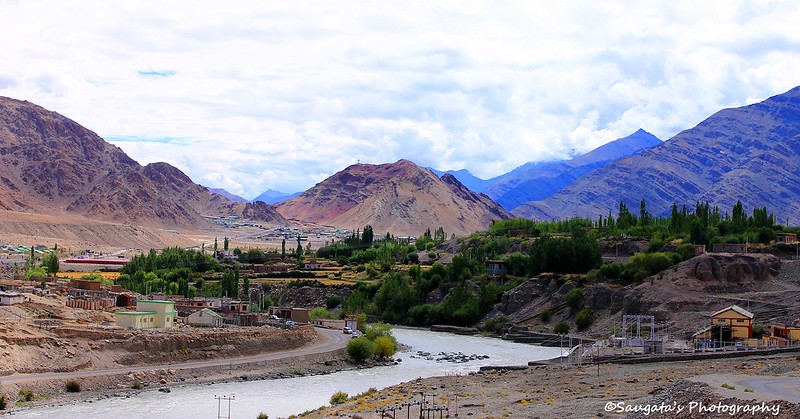
Once we passed Karu, we had one more fellow traveller with us – the Indus – which runs towards Chumathang as a trusted companion, if one is traversing in the same direction.
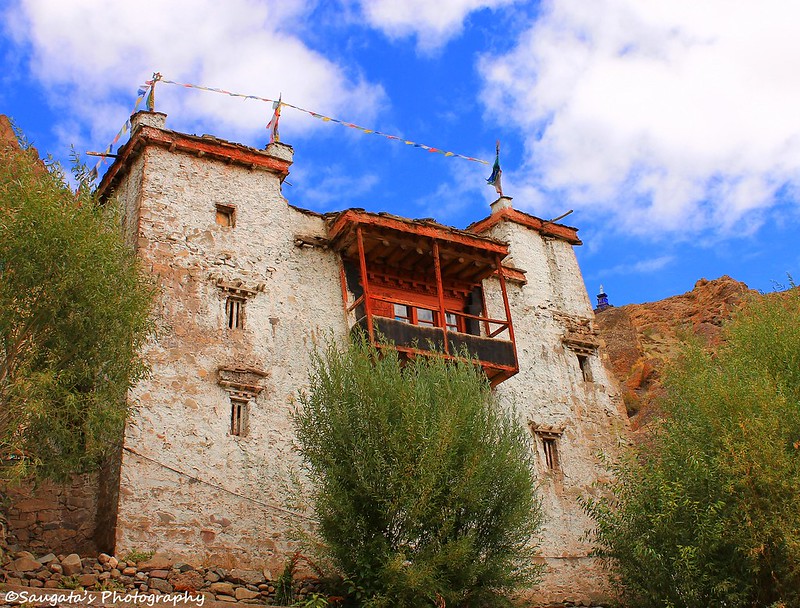
After Karu, we needed to take a diversion towards Hemis and through some spellbinding landscapes; Hemis – the largest monastic institution in Ladakh - was in front of us, surrounded by mountains.
After spending some moments with the already familiar paintings, carvings, architecture, we returned back towards Leh again through the same sky-kissing-the-mountains landscapes.
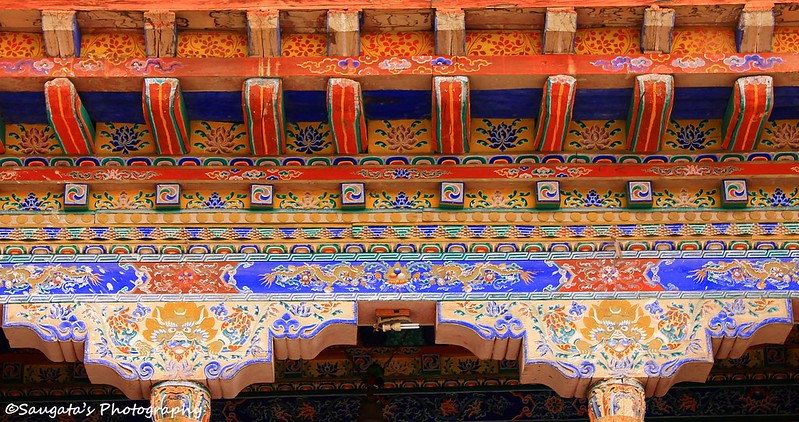
Decoration
Hemis Monastery from a different angle
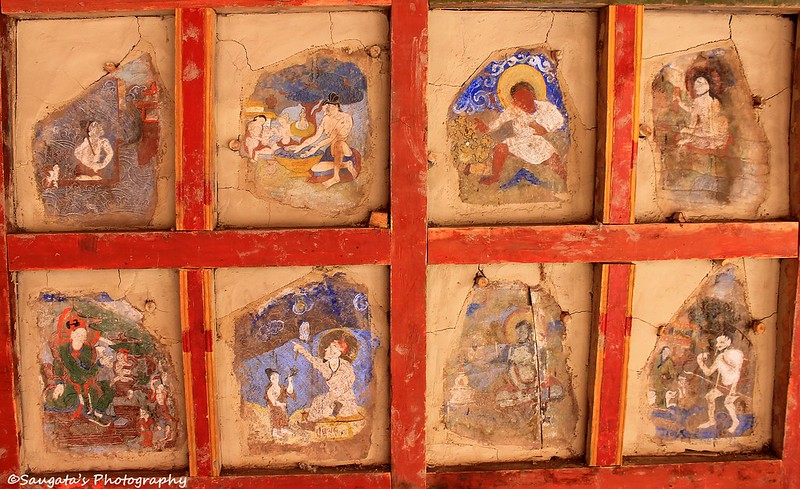
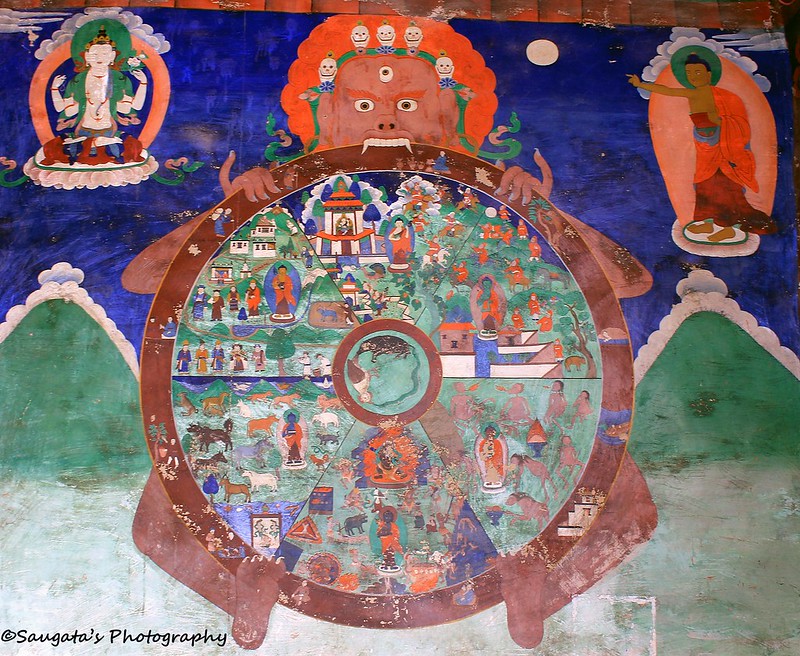
Paintings

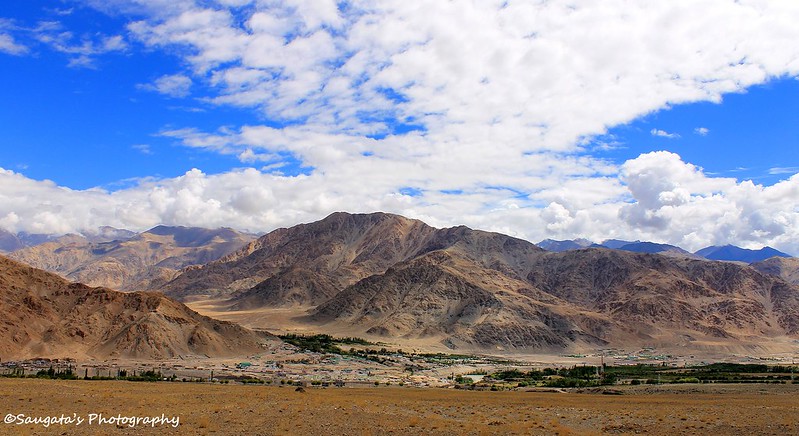
Landscape


Stakna Monastery
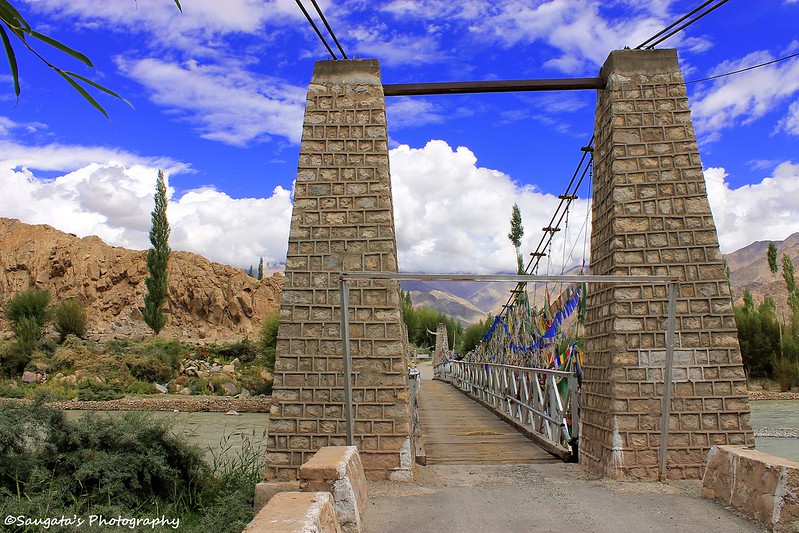
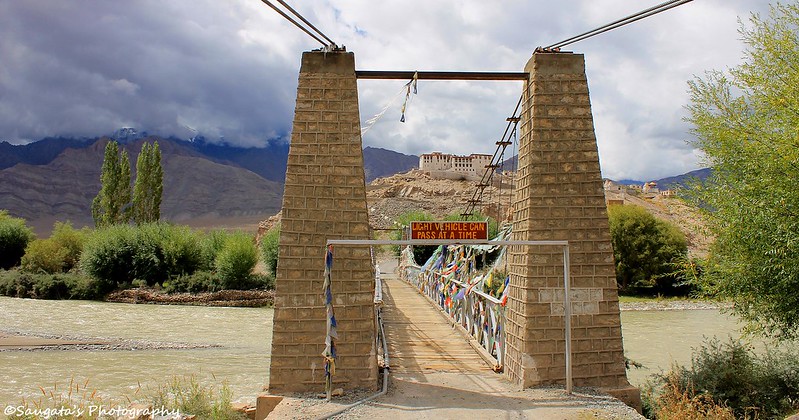
From Hemis towards Leh, we took another diversion to reach Stakna Monastery. The road towards Stakna was heavenly, especially the part where we were on a very narrow bridge to cross the Indus.
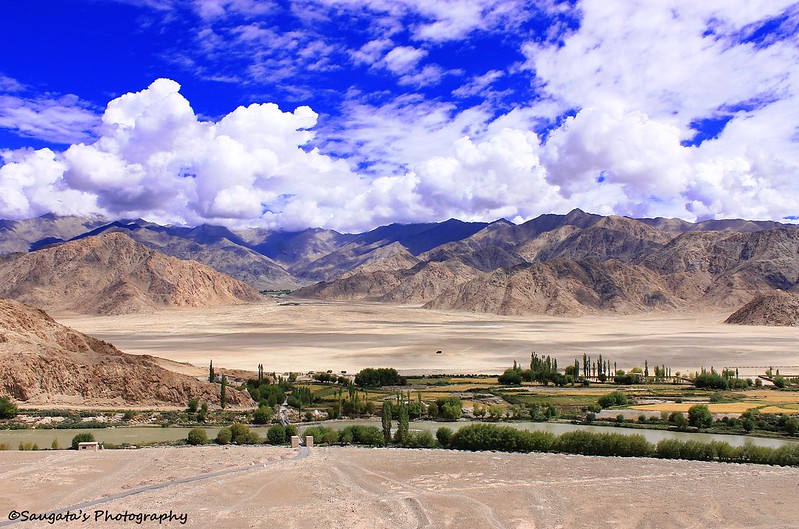
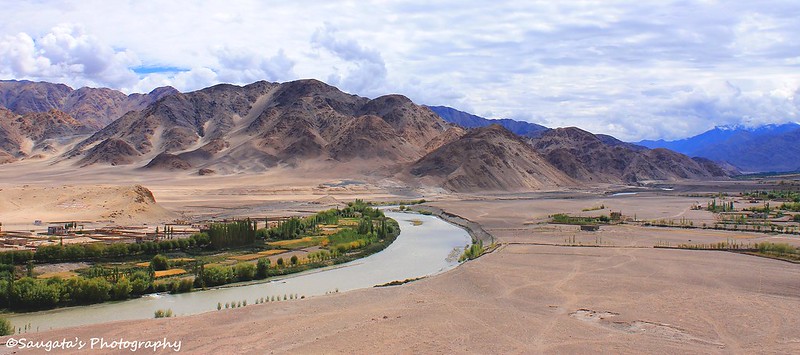
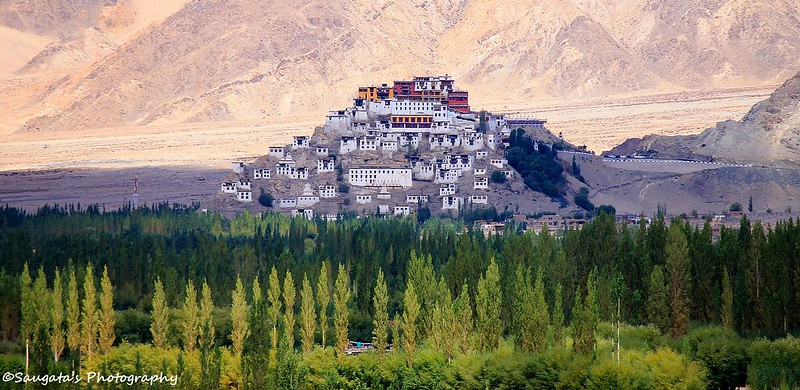
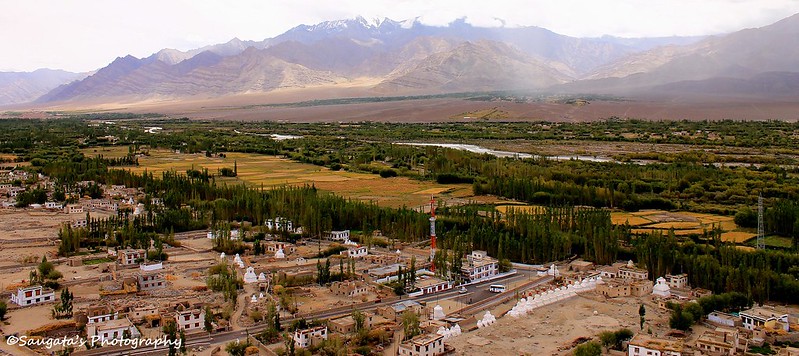
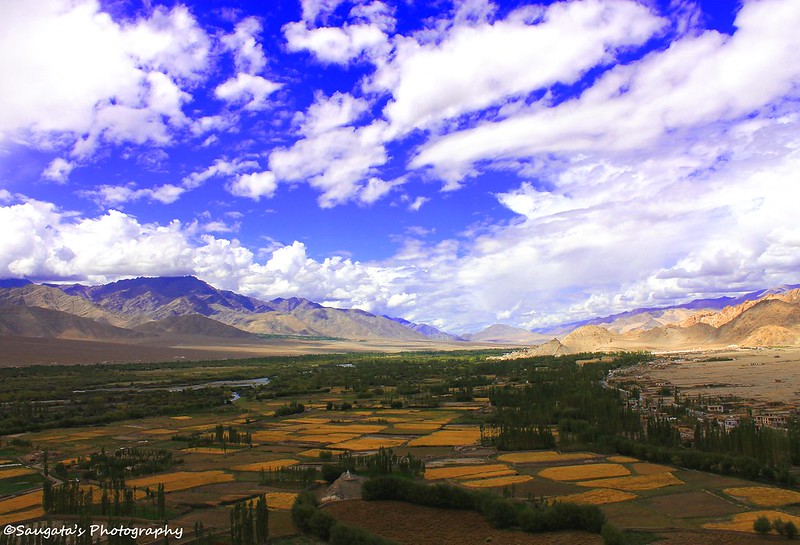
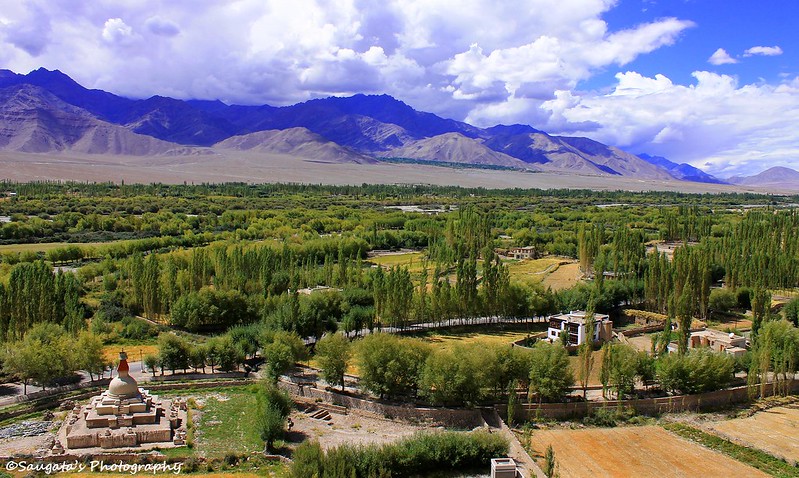
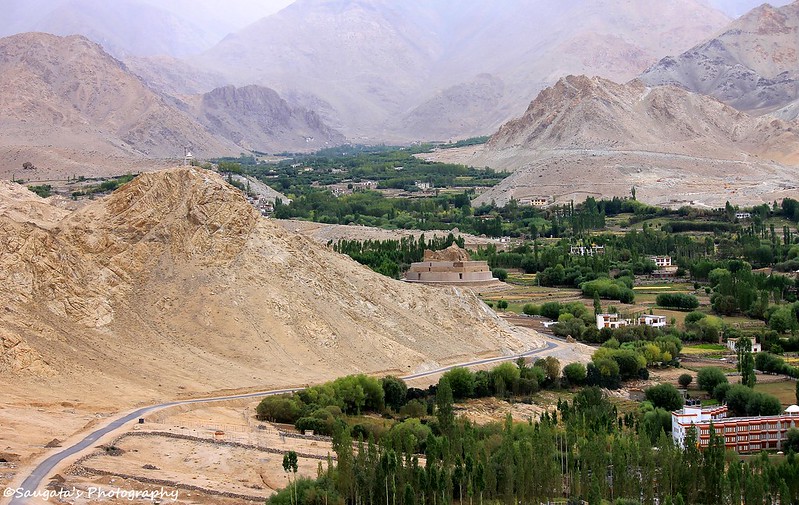
Stakna was a very small monastery on the top of a small hillock and as it is not even as half famous as Hemis, Thiksey etc, most of the tourists give it a miss.But when we reached at the top, we immediately knew that we didn’t make a mistake coming here. The 360 degree view offered was absolutely breathtaking, without any exaggeration. The Indus valley, the village below and the Thiksey monastery far away all contributed to the heavenly beauty.
I am actually at a loss to describe how it was, so I leave it on to the readers to judge from the below pictures.
On the way to Stakna - visible at the left
Stakna Monastery
Shot with 250 mm Lens - can you imagine the vastness?
From the same angle, but with 18 mm Lens this time
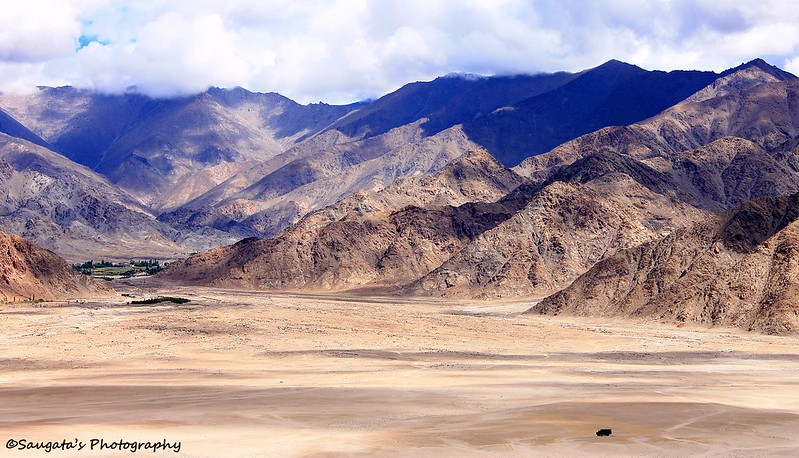
Indus Valley - from Stakna top
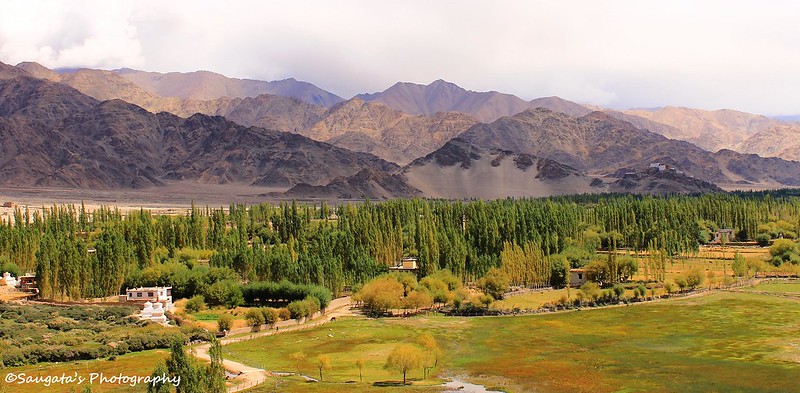
The valley below
Thiksey Monastery from Stakna
Indus Valley - Thiksey at right
Stakna at the backdrop
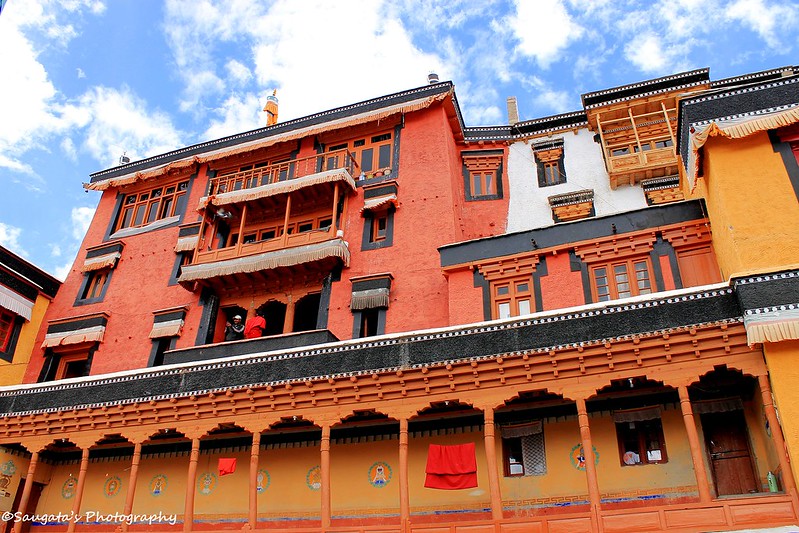
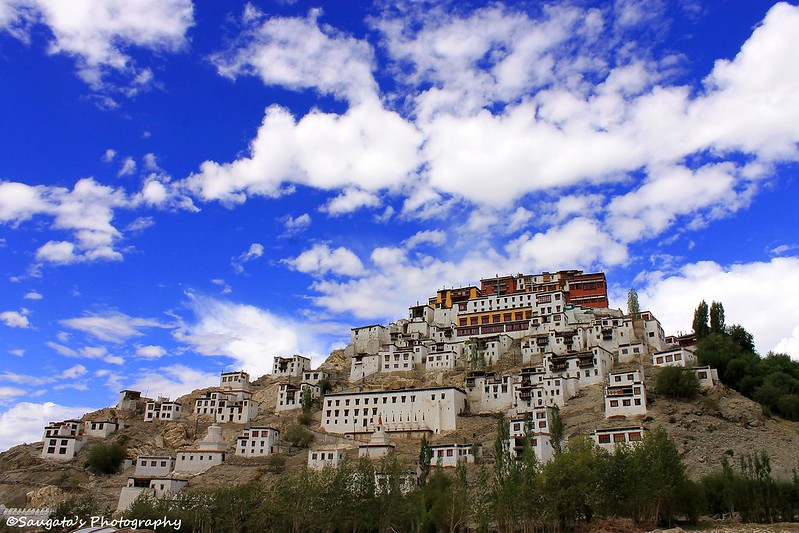
Thiksey Monastery
We spent more time at Stakna than Hemis which was quite incredible, given that many travellers don’t even consider Stakna to be on their itinerary. In fact, while we found Hemis and Thiksey all thronged, Stakna did not have anyone else apart from us and another fortunate group of travellers.
The next destination was Thiksey – another popular destination. We already passed by Thiksey while on our way to Hemis, so we already knew what to expect from the same.
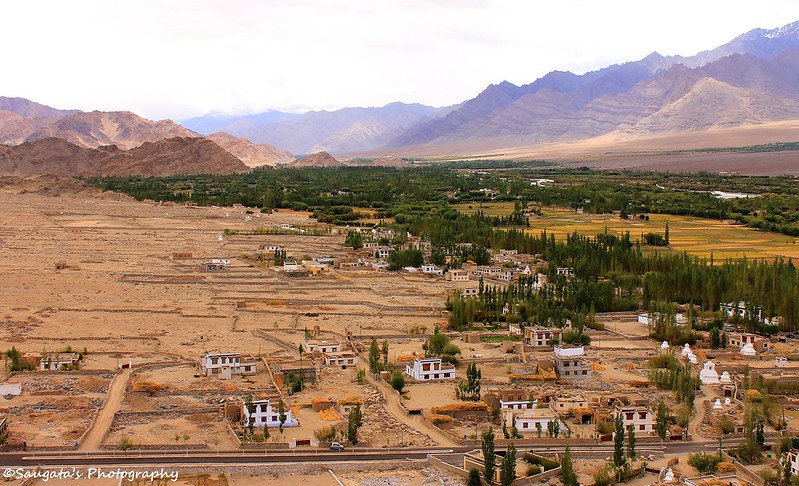
Thiksey was beautiful undoubtedly and offered spectacular bird’s eye view of the village below, apart from the normal sacred items and utensils.
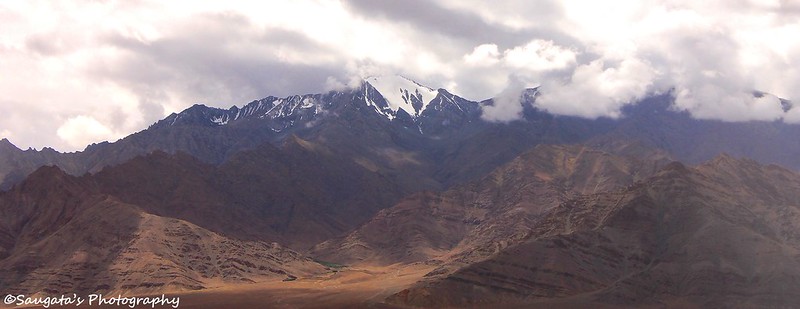
Stok Range far far away
The Stok Range
Thiksey Monastery - a closer look
Chhortens
Thiksey from a photogenic angle
Shey Palace
With our heats already filled up with joy to see these beautiful monasteries in person (I have read and seen so many articles and snaps about them), our journey was all but over, as the Shey Palace was the next destination.
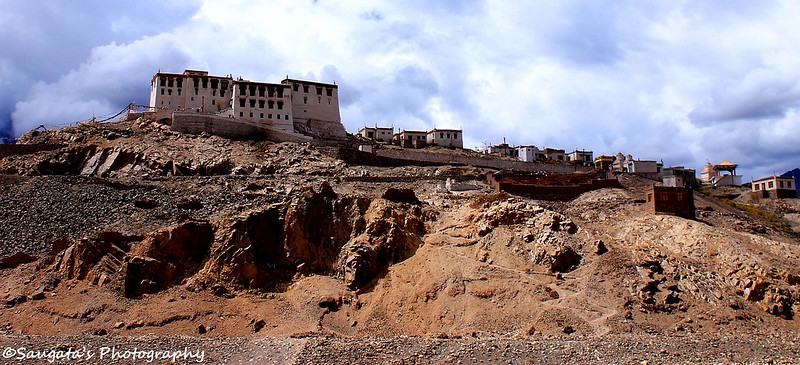
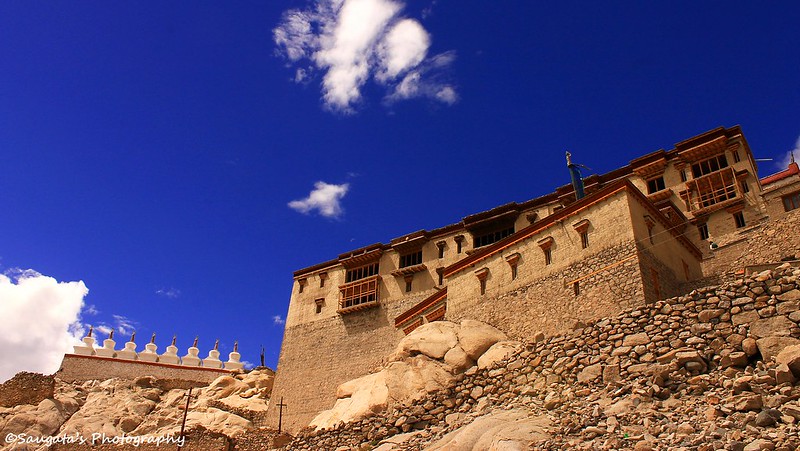
Shey Palace was built at the top of another hill by the kings of the Shey dynasty in 16th century in front of a small lake. The royal family don’t live here anymore and have moved to the Stok palace. Most of the palace were in ruins and had little to offer – apart from a golden top Chhorten. But again, the views offered were magnificent.
Shey Palace
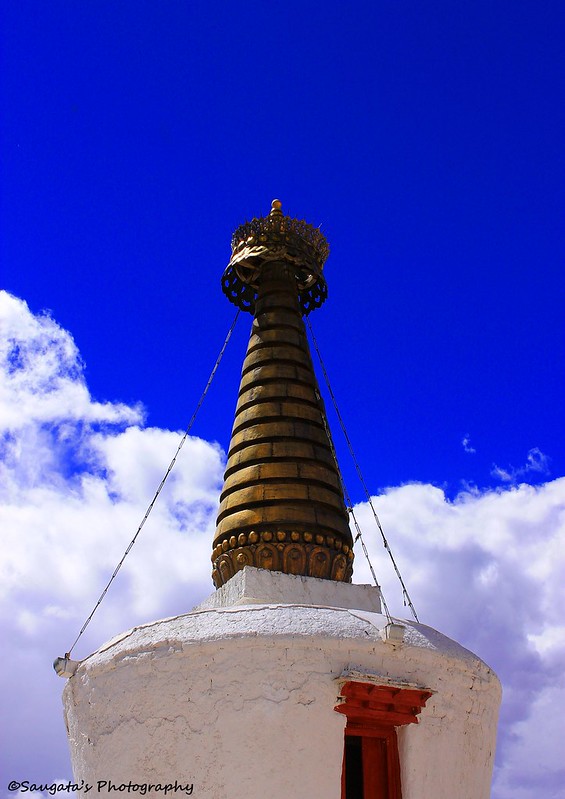
Golden Top Chhorten

Sindhu Ghat
It was already 1.30 pm and so before we continued further, we thought it better to get our stamina back by consuming some food, so we had our lunch at Choglamsar village, on our way to Leh.
After the resumption, the first halt was at the Sindhu Ghat – a place newly built just besides the Indus river to worship the river itself. The place was really amazing and the fact that we could actually touch and dip our feet into the cold water of Indus made it more so. The whole place was so peaceful and quiet that apart from the intoxicating sound of water, nothing could be heard.
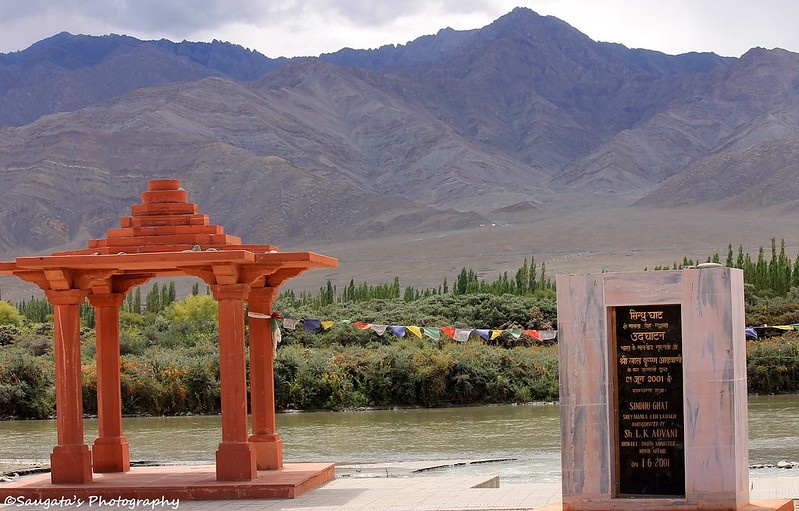
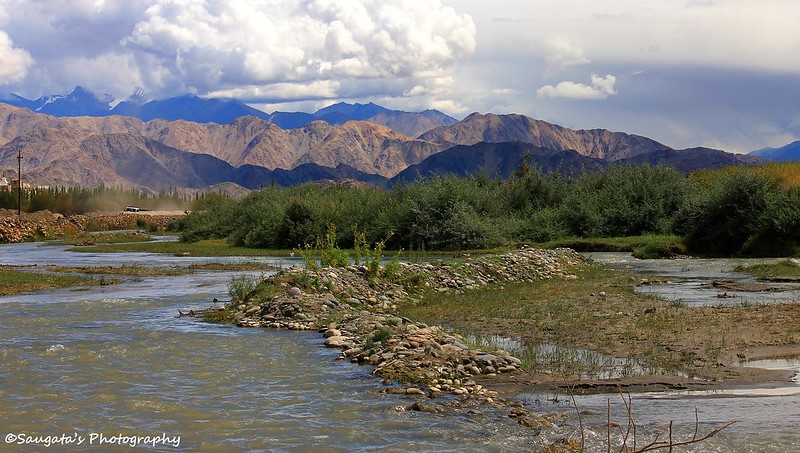

Leh Palace
Leh Palace was built by the local rulers of the Namgyal dynasty around 1553 AD.
We didn’t expect much from the Leh palace after what we have seen from the Shey Palace, but we were wrong. Leh palace was much much bigger than its counterpart at Shey and was in a much better shape.
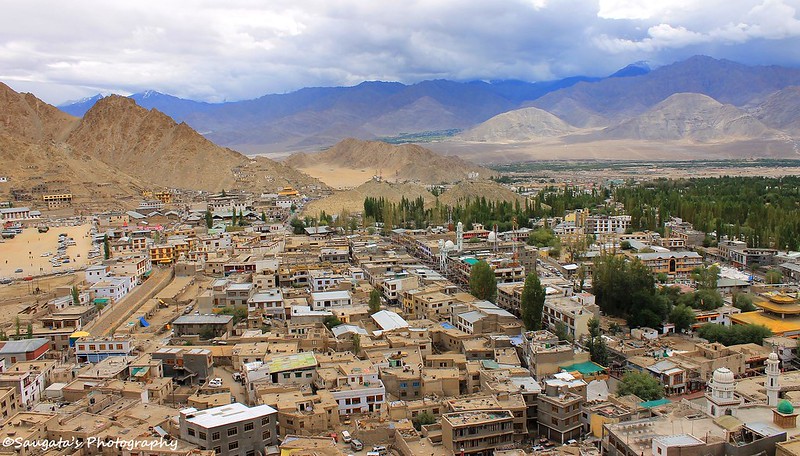
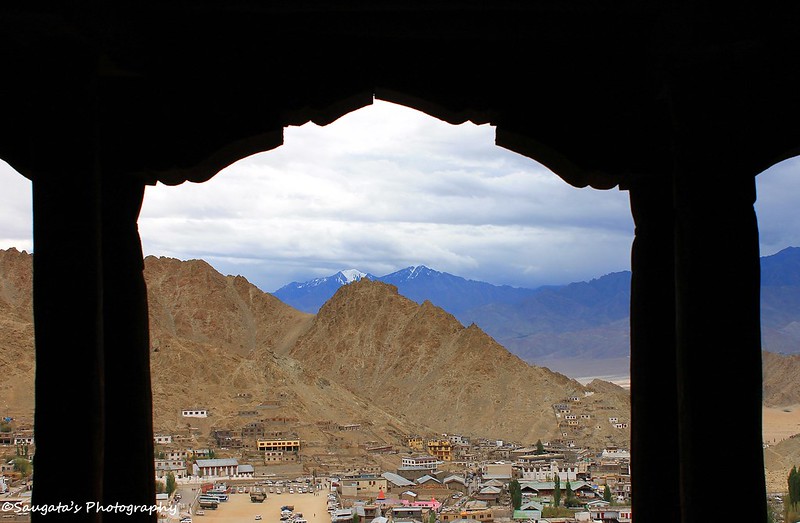
There were many rooms in the palace, explaining to us how the royals lived – many of rooms exhibited items and utensils. The whole city of Leh was visible from the rooms with the vistas beautified by the rugged mountains, found in abundance everywhere around the town.
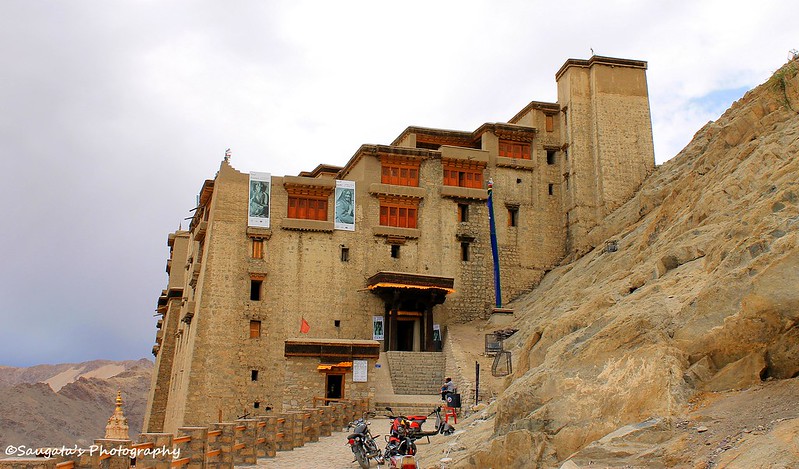
Leh Palace
Leh City, from Leh Palace
Solitude

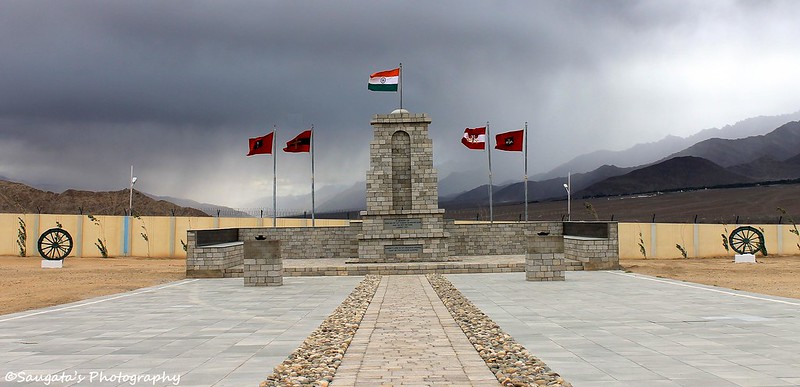
Hall of Fame
The sky which promised to be a great day ahead was no more. Now it became cloudy and started drizzling, dampening our spirits. So when we entered through main gate of Hall of Fame, we didn’t know what to expect.
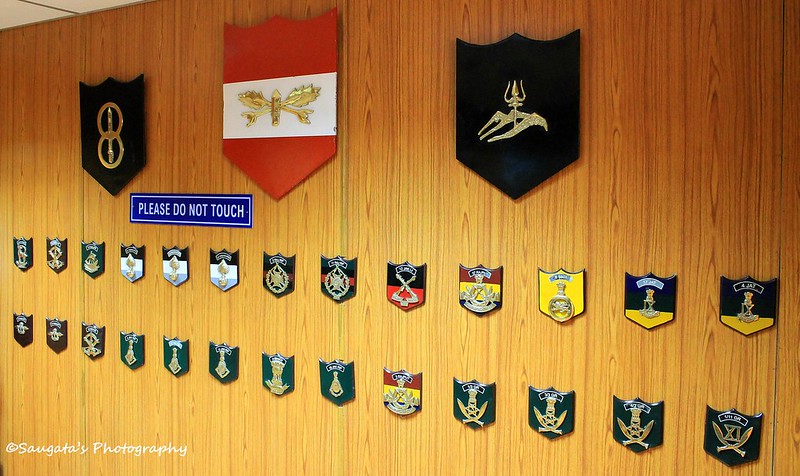
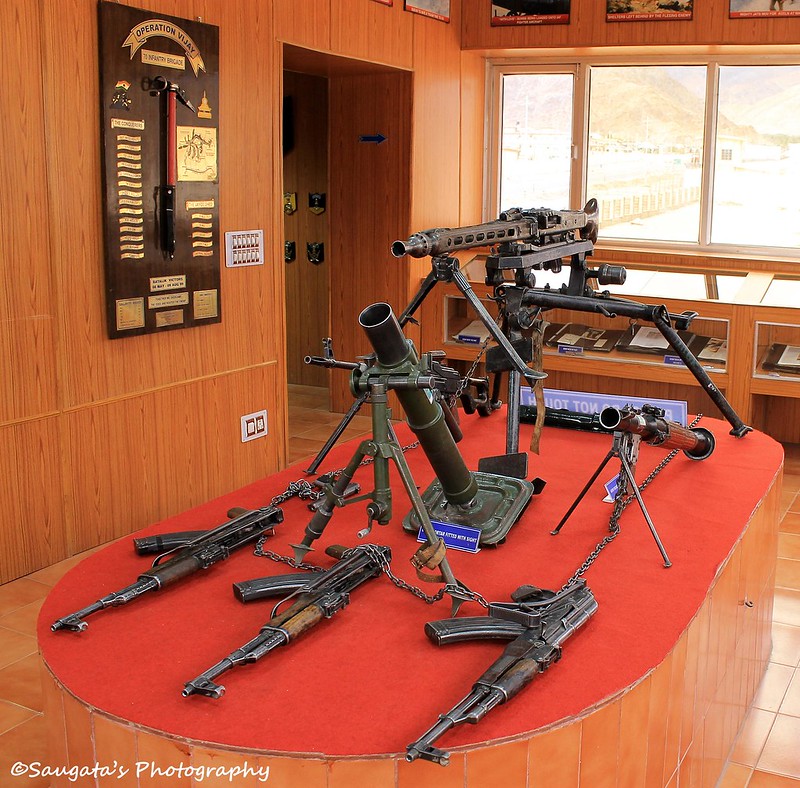
Hall of Fame was built by the Indian Army to showcase what it had done for the country, for people like us. It housed details of each victory India achieved through the hard-fought battles against its neighboring country – during 1962 to 1999. Pictures of jawans capturing and re-capturing the places from the opponents, archives, maps, detailed information of the war everything were greatly preserved. Even the actual arms recovered from the opponents and personal/official documents seized from the enemy were on display. The pictures of the martyrs made us sad, the pictures of the victories made us happy. But overall, we felt proud to be an Indian. A great Salute to our Army, Air Force and Navy!!!
When ‘Elvis had left the building’, we were definite that this was the best place we visited on the day.
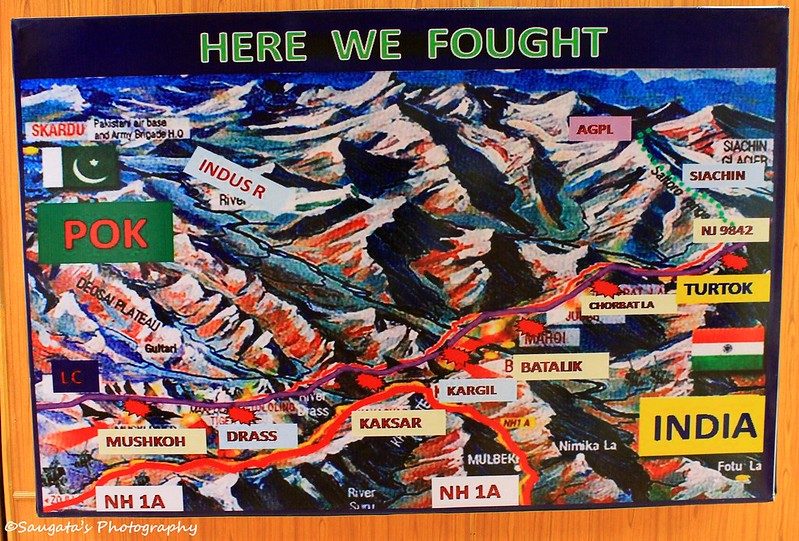

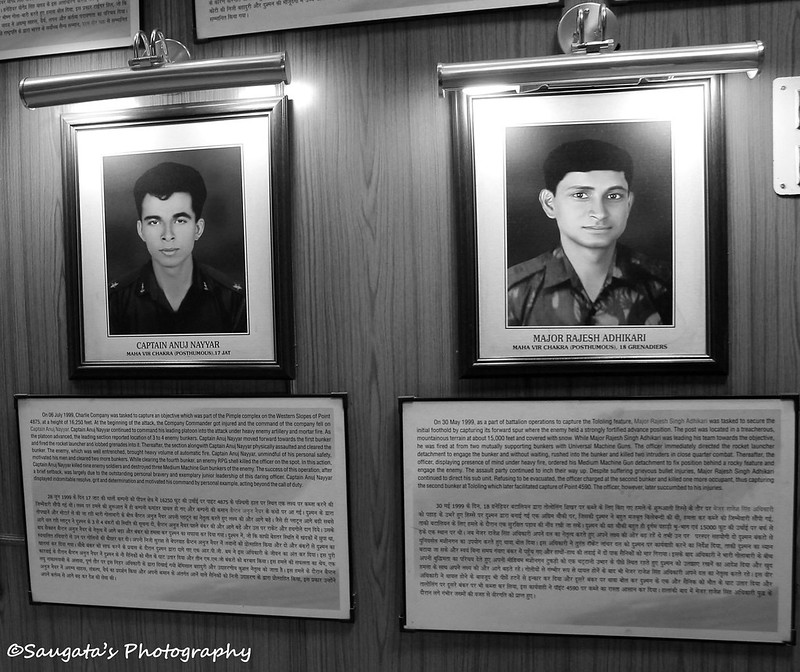
The brave martyrs
Badges
Arms recovered from the enemy camps
A funny one
Indian Air Force Emblame

Shanti Stupa
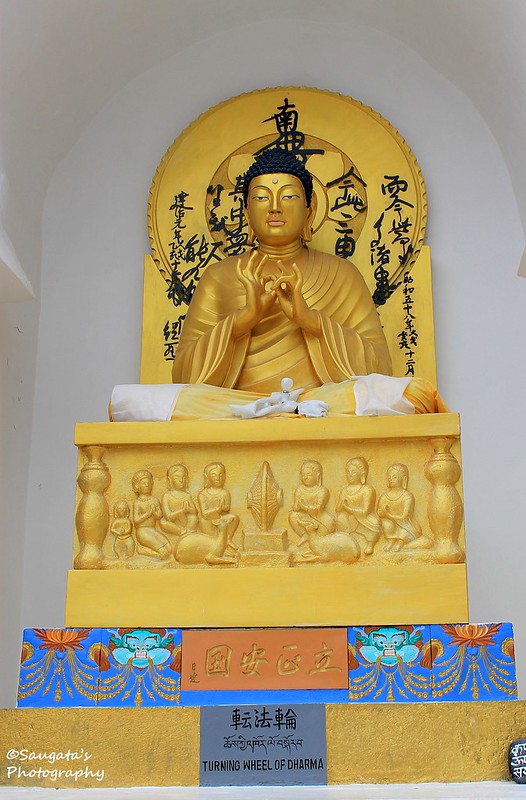
Stanti Stupa was built by the Japanese as to show a symbol of love and peace in the region. As per plan, Shanti Stupa was on our list to be visited during the dusk. The day was about to end and it was almost dark because of the cloud, so it was a great timing to be at the feet of Lord Buddha. The Leh city was slowly sinking in the dark with some lights flashing here and there like fireflies.
Shanti Stupa is always a great place to be but after a tiring day. Shanti Stupa lived up to its name – we found what ‘Shanti’ is, even if temporarily.
Rigzin dropped us in front of Asia Guest House and advised us to take rest, as we would be going for a long journey the next day – towards the Nubra Valley.

Shanti Stupa
The One
The view from Shanti Stupa
To be continued...

Next: Nubra Valley, snow and Sand

Friday, 5 October 2012

The Chronicles of Ladakh - Part 3 - In the Capital of Ladakh

Day 3, 10th September, 2012
Lamayuru > Alchi > Likir > Leh (175 KM)
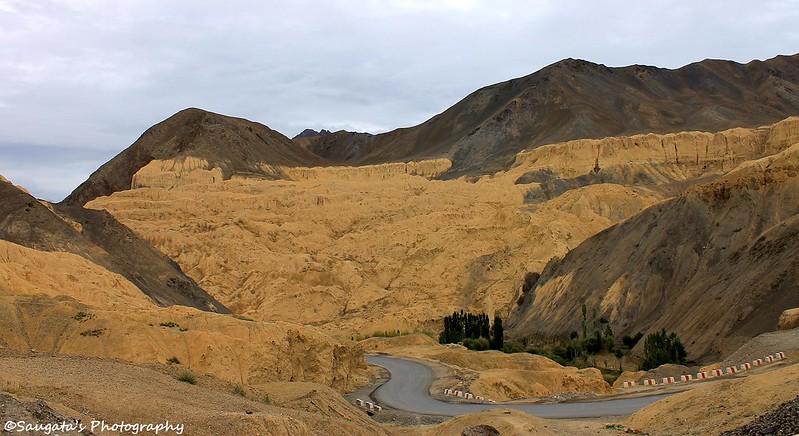
Lunar Landscape
We started early around 7.30 am from Lamayuru in order to reach Leh early and make use of the day by roaming around the Leh market (married men travelling with family cannot avoid the market!). Anyway, after the very moment we departed from Lamayuru, we came across the next ‘tourist spot’ called Lunar Landscape or Moonscape or Moonland. The place is said to be very similar to the topographical nature found on the moon, but we had already seen so many similar moonscapes on our way, we really found it nothing new or extra-ordinary.

Alchi
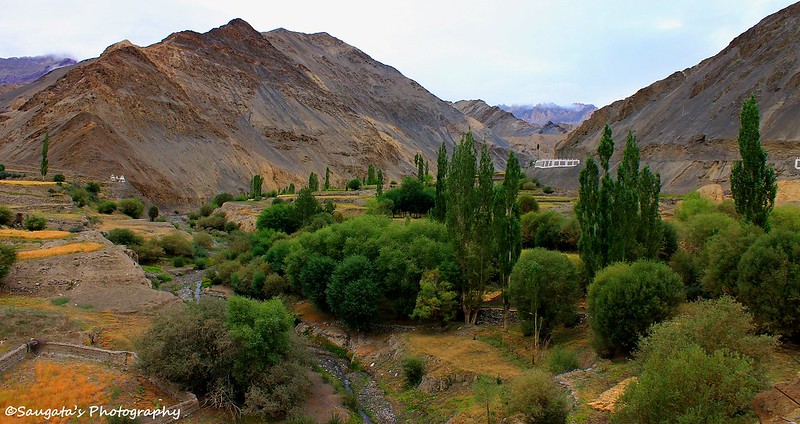
On the Srinagar Leh highway, one has to take a right turn towards Alchi village to visit the Alchi Monastery. We crossed the Induskar River (the name is my invention since it is the combination of the rivers Indus and Zanskar) and traversed through one of the most beautiful landscapes towards Alchi. From the diversion it barely took 20 mins to reach the parking at Alchi village, beyond which a narrow alley pointing gradually downwards would lead the entrance of the Alchi Monastery.
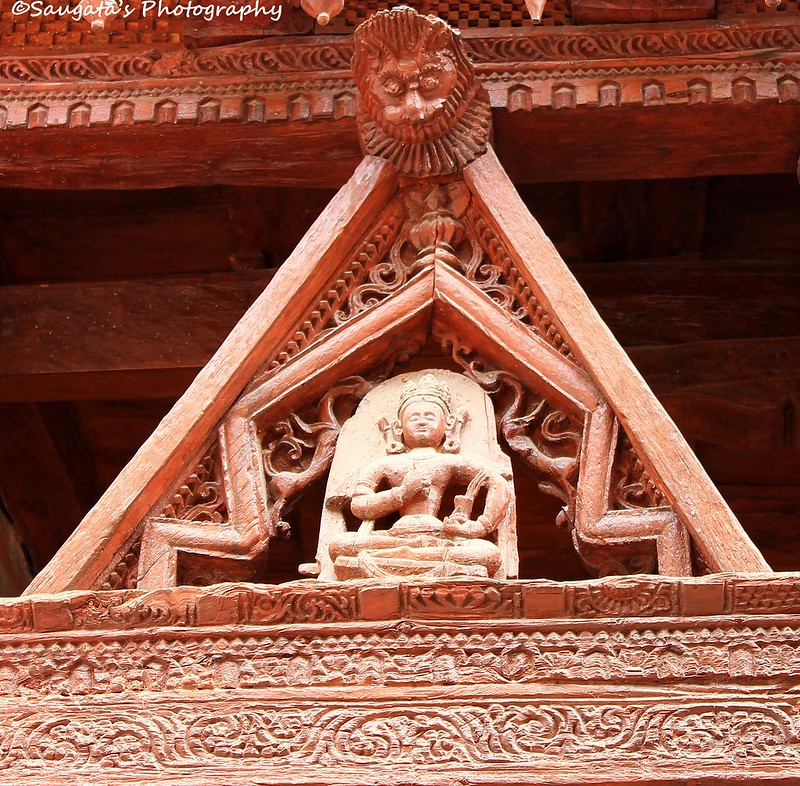
Inside the monastery, there were magnificent idols and paintings of Buddha and His life, but photography was restricted inside. And the exterior was neither that photogenic nor interesting compared to the treasures hidden inside, so many might find this place of little or no worth. But the place was more than 400 years old so for history enthusiasts the place could be a no-miss.
We came back to the parking once we were through with Alchi, had our breakfast and then set out for Likir.
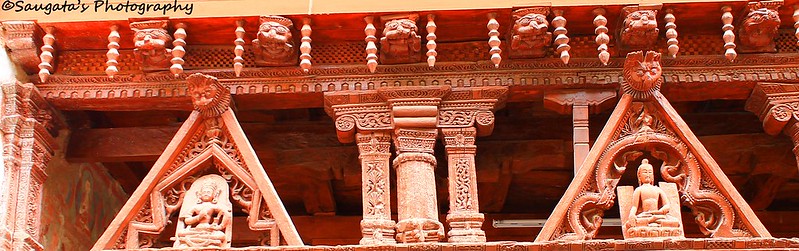
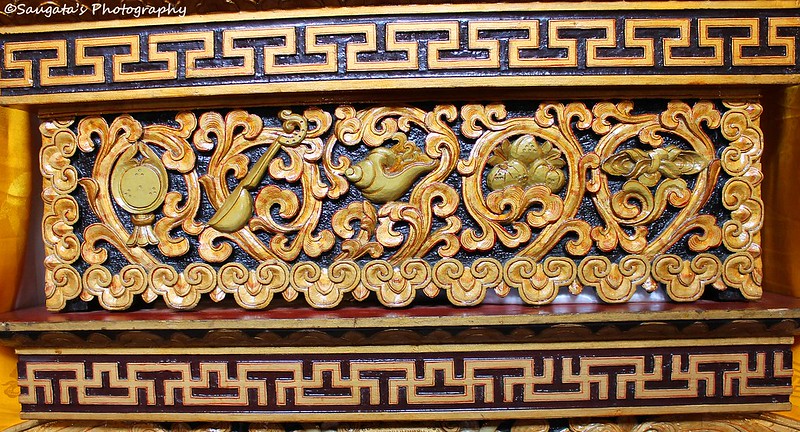
Carvings at Alchi Monastery
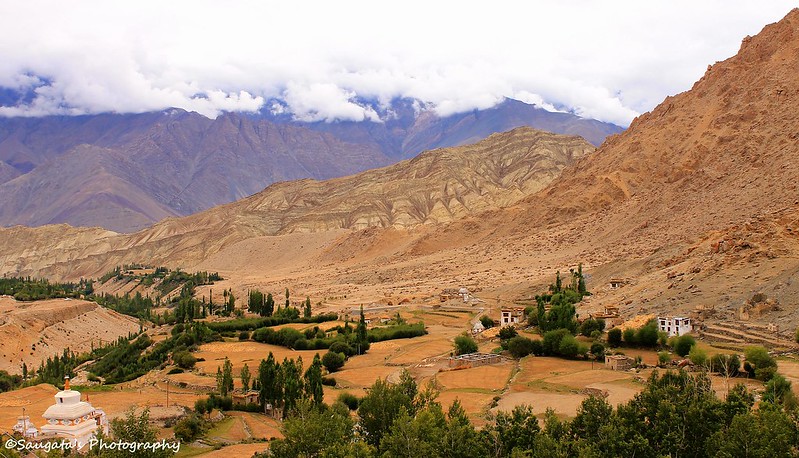
Alchi Village

Likir
From Alchi, we again returned back to the main highway with the path already travelled and through those same gorgeous vistas. The Induskar river would flow in the opposite direction for the whole of the journey ahead.
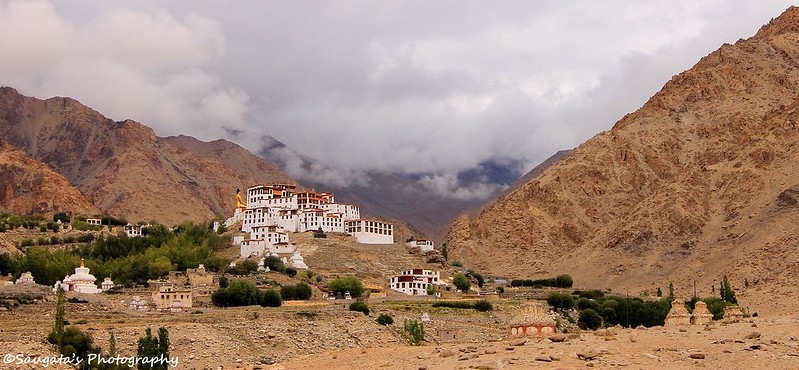
For Likir village, once again, we had to take one more diversion, but this time towards the left from the highway. After a very short off-roading from the off-road, we started climbing through a very narrow road. Fortunately there was no car from the opposite direction otherwise I don’t want to think what might have happened. After 15 mins or so through this road, our fears gradually gave way to exclamation as the Likir Monastery appeared after one turn. The scenery was so breathtakingly beautiful that I forgot to take photos.
We appeared at the parking without any more incidents worth mentioning. There was a giant statue of sitting Buddha outside and behind the monastery which was an added bonus. And no photography restriction anywhere in the monastery made it more alluring like us.
We saw the monastery closely. Inside there were many Buddha idols kept to be worshipped as well as too many utensils and curious little things – apparently they were used in prayer or as offerings. Paintings, thankas and everything else produced an unquestionable sacred atmosphere.
We returned back via the same scary path to the main road – again no cars from the opposite direction this time. But this time I didn’t forget to shoot Likir through the view finder.
Likir Village from the Likir Monastery
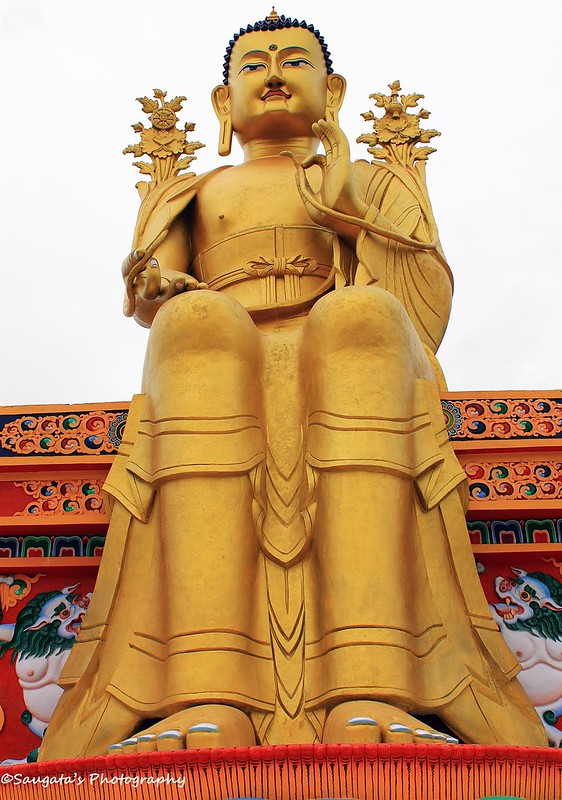
The Sitting Buddha
The Deserted Ones
What are these?
Offerings
Sacred Carvings
Likir Monastery with the Sitting Buddha beside

Confluence at Nimmu
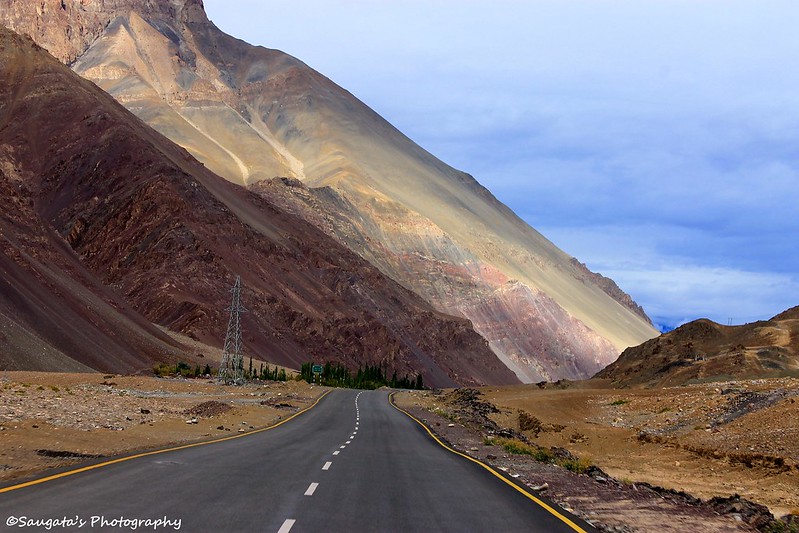
Once we were on the main road once again, the journey began towards Leh through the Basgo Plains – which is a fantastically laid tarmac of 10-15 kms on a plain surface at a stretch. We were hard-pressed to believe that all these were above 3500 mtrs od sea level. BRO does a great job – but one has to see it to believe it.
Nimmu is a very small village of little significance, nestled at the lap of the hills – 55 kms from Leh. One might just skip it considering a stay not worth for a longer than five minutes at the most. Had it not been for the Confluence of Indus and Zanskar, this village would have never been recognized by the tourists perhaps.
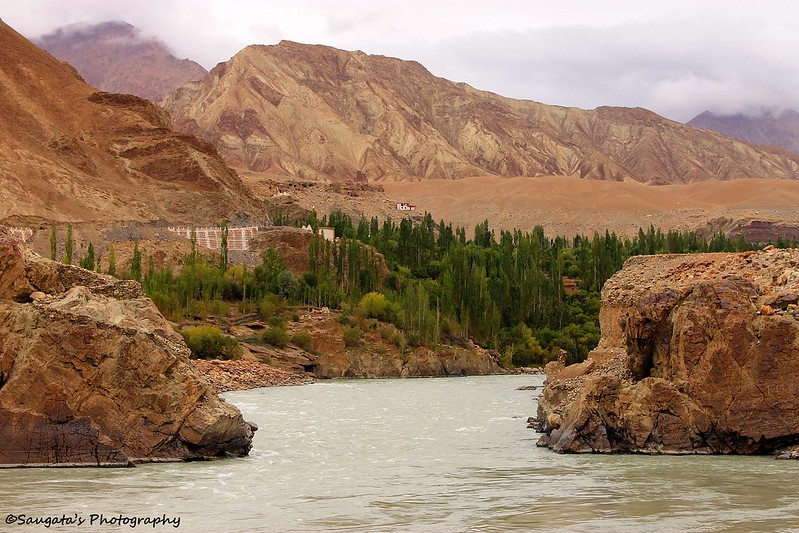
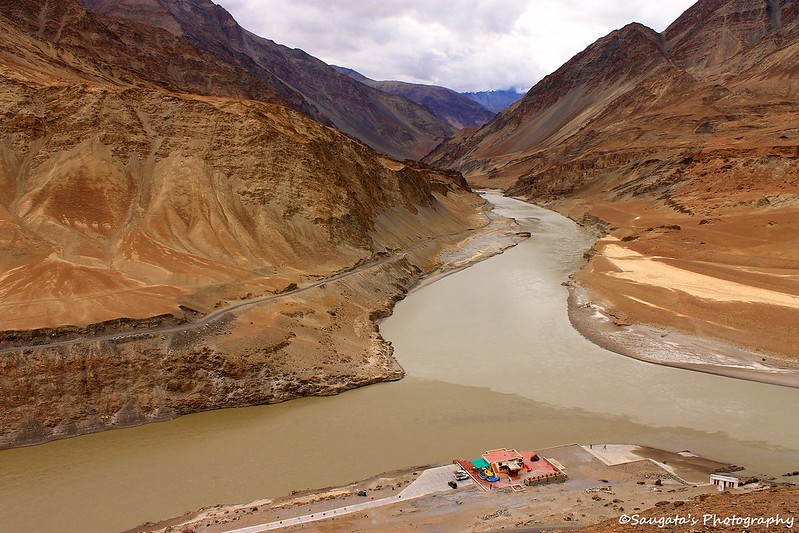
The confluence where Indus from Changthang Valley and Zanskar from the Zanskar Valley converged with each other and transformed into Induskar, was a very prominent one due to the difference of the colours of the water carried by these two. In the picture below, Indus on the left hand side is grayish and perhaps a couple of shade darker than its right hand counterpart, Zanskar.
Basgo Plains
The Confluence
The bridge looks so small
Magnetic Hill
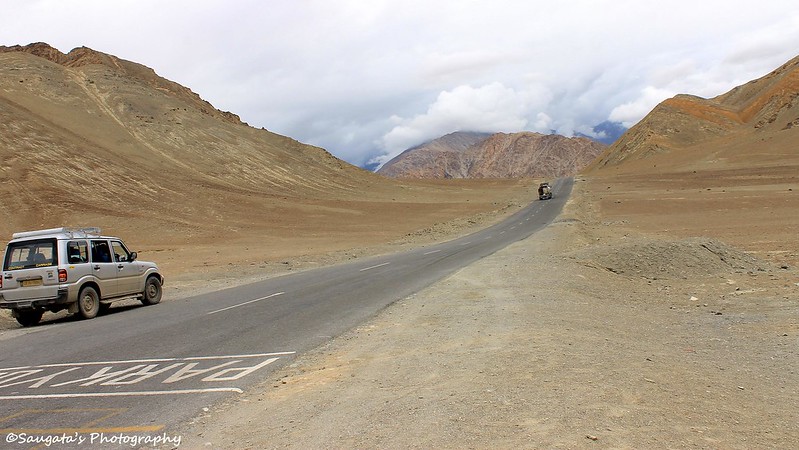
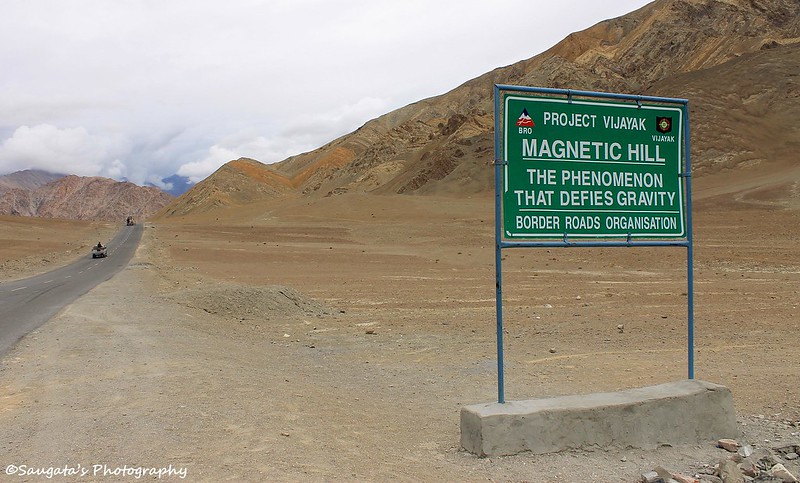
Some more drive towards Leh brought us to a place called the Magnetic Hill. There were so many mysterious information available about this place over the internet stating that the car would actually defy gravity and go upwards when the engine is killed and the car put on neutral. BRO even put up a signboard stating the same. But, the place actually had nothing, absolutely nothing of astonishment. It was a sheer disappointment for us, even Sonamji was a bit disgusted about this place.
Interesting Signboard - Marketing Gimmick?
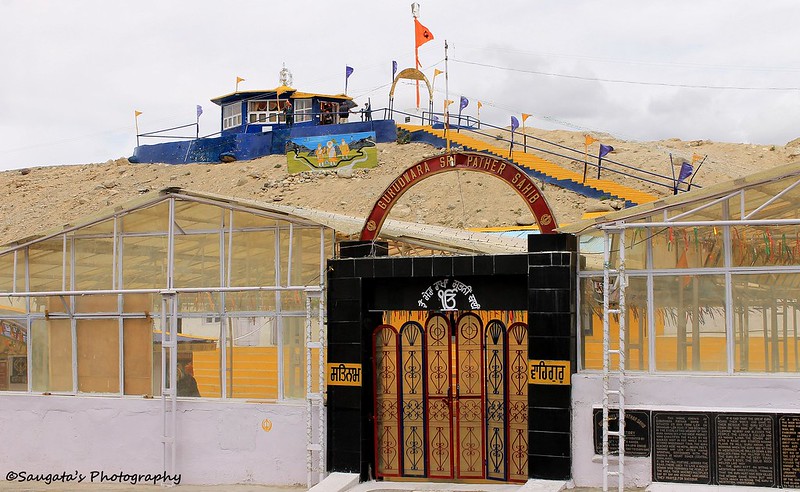
Gurudwara Patthar Sahib
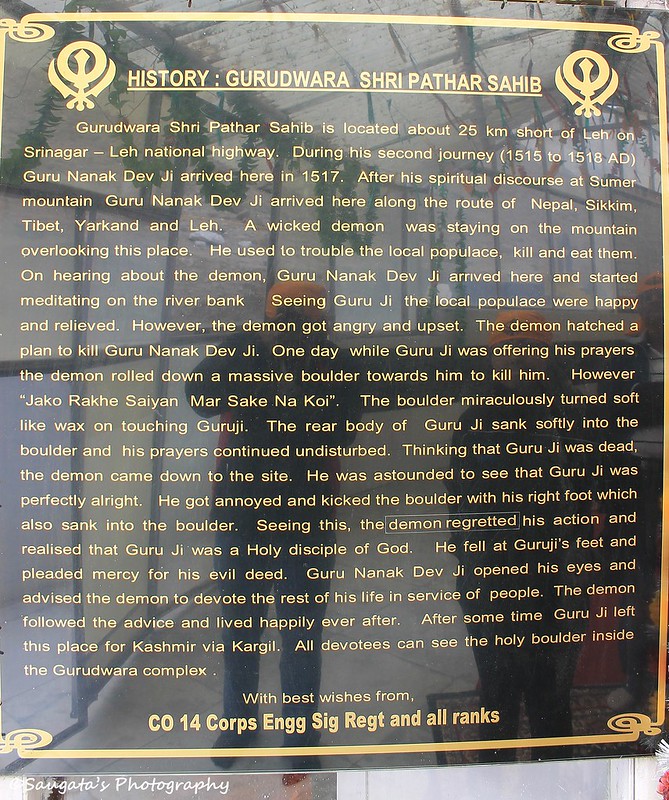
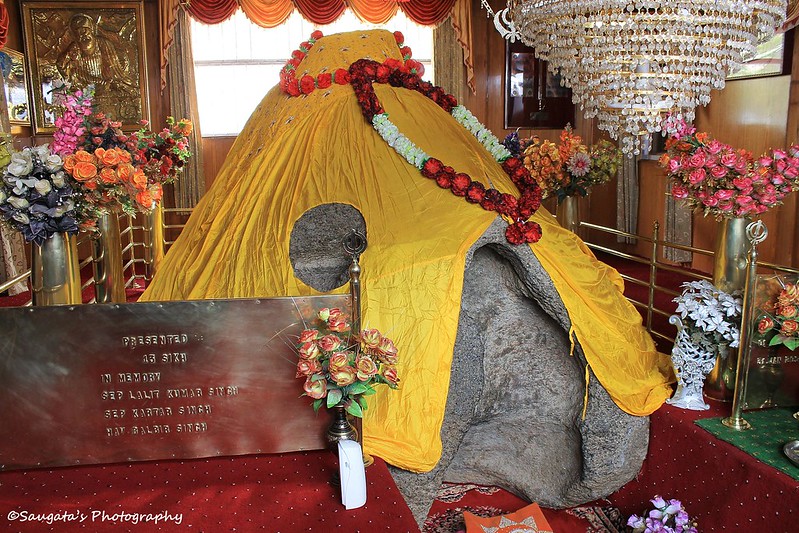
With mixed feelings we drove, drove and drove – but again not for long, for we came across the next attraction called Gurudwara Patthar Sahib. It was stated that in ancient times, a demon who loitered around in this region tried to kill Guru Nanak ji with a huge stone. That stone did not work because of Guru’s blessings and is now worshipped as a Gurudwara. The story is given in the picture below.
Atheists and the believers can argue, but the place was cool enough to take a breather. And the sweets and hot tea offered by the disciples to every traveller was really a welcome break.
The Sacred Stone (Patthar)

Leh and Rigzin
After an hour or so, around 12.30 pm we were in the capital of Ladakh. Sonamji dropped us in front of the Asia Guest House. The room was spacious and clean enough for a love at first sight and the staffs (two girls) were full of smile to win over you. The garden in the courtyard provided a much needed relief to the eyes from the barren lands of Ladakh – I think that’s the reason why every house and hotel in his arid region maintain some form of the garden inside the premises.
I called Rigzin and he arrived within 15 minutes to meet and greet us. When he arrived I was touched by the Ladakhi hospitatlity, once again. He was so cordial and his behaviour was so genuine that it flushed away the barriers of different cultures and languages instantaneously.
The plan was all set; we were to leave around 3 pm for the inner line permit after the lunch and a couple hours rest and then he would drop us around the Leh market where, as per his strict instruction, we would roam slowly without exerting ourselves.

Inner Line Permit
Sharp 3 pm Rigzin arrived in front of the guest house and we were all set. I filled up all the forms, but since we have arrived a day before Rigzin advised me to write everything afresh instead of changing the dates in the same forms. So from the DC office we ran towards the only Photostat shop nearby to get the standard application form. Rigzin came handy this time (and he would be for the countless times going forward) by getting everything sorted out as I experienced a bit of breathlessness after the short run to the shop.
Anyway, when we arrived back at the entrance of the DC office after Rigzin has sorted out the documents in order and I filled them up (I did it so fast that no wonder Rigzin proposed if he could nominate me to the Guinness Book of World Records as the fastest writer in the world), apart from me no one could be seen applying for the permit which was a blessing in disguise.
We submitted the documents at the designated counter. They verified the same and asked for a fee of 200/ (10 days – 10/ per person per day as permit fee) and passed the same to the next counter where I was asked to pay 80/ (20/- per person as wildlife protection fee so 40 rupees + 20/- per person as a donation to Red Cross so 40 rupees). We were again passed to another counter – the final frontier. Here the permits were stamped and I paid 400/ (200/ per person as Environment Protection Fee). So in 15 minutes and with 680/ I got what I wanted – a 10 days Inner Line permit to roam around Nubra Valley, Turtuk, Pangong Tso, Tso Moriri and Hanle.
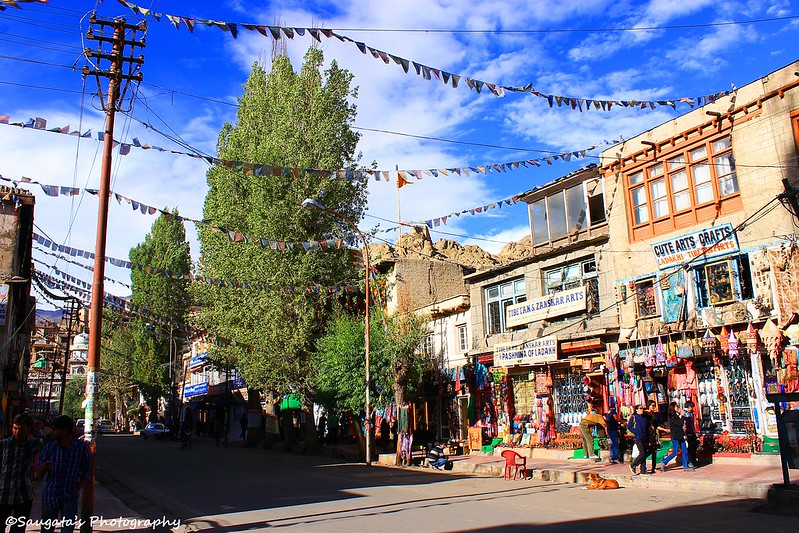
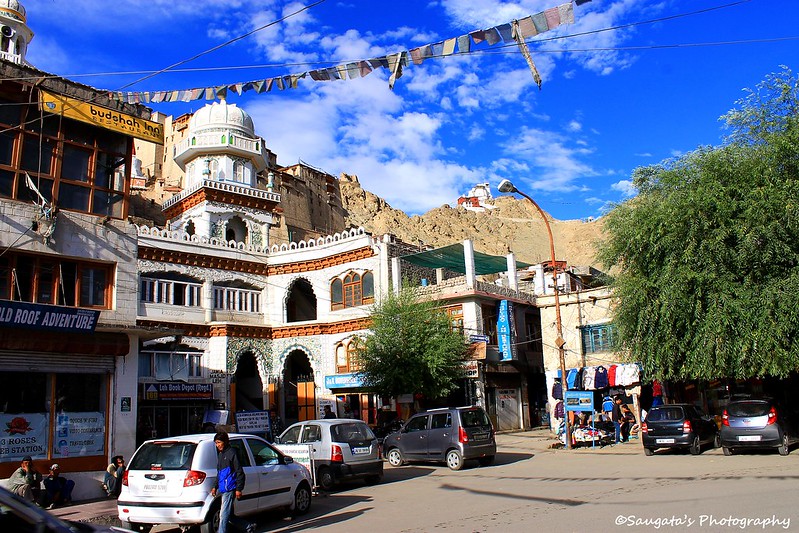
Around the Leh Main Market
Rigzin dropped us nearby the Leh market where I was to follow my better half for the next couple of hours towards any direction. I did it religiously no doubt. The functional SBI ATM helped me of course, whenever my wallet ran out of cash, but fortunately that happened only once.
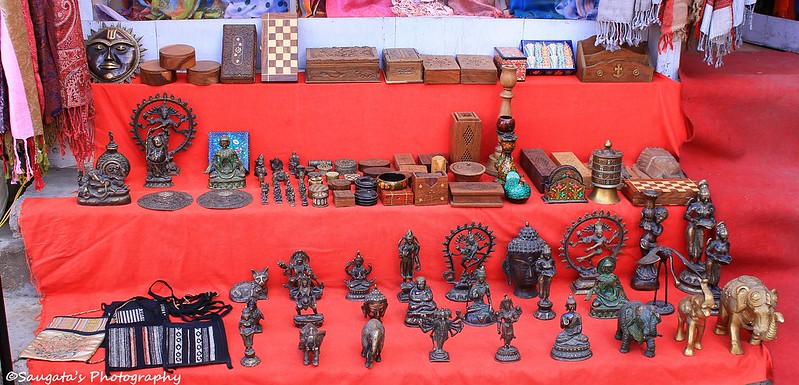
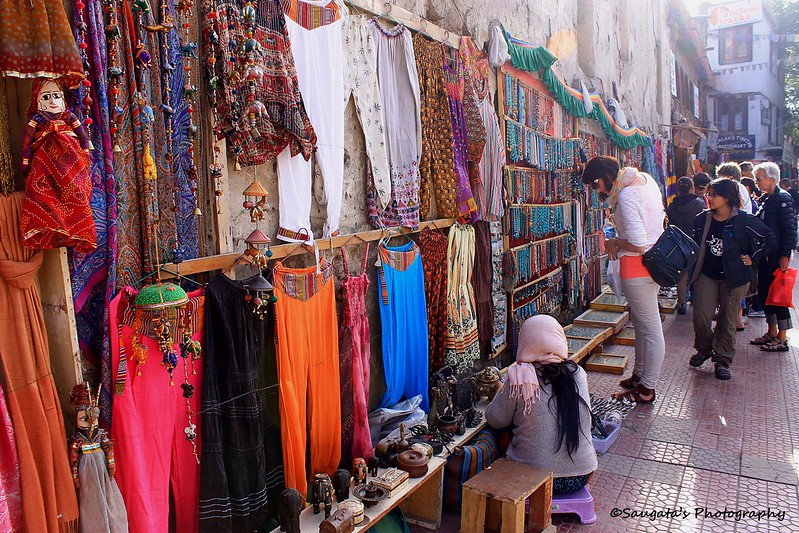
While my wife was busy in bargaining and shopping, I was more interested in exploring the market. The market was just like a market should be – one can find each and everything apart from the various art and crafts showrooms and shops. Sweets, books, accessories, ornaments, food, spices, clothes and many more. And the sky was becoming clearer.
When the dark prevailed, we came back to our hotel – as slowly as possible as Rigzin mentioned – for a much needed rest. Fortunately we did not encounter any symptoms of AMS whatsoever. Next day we would roam around the Capital to complete the local sightseeing.
Shoes
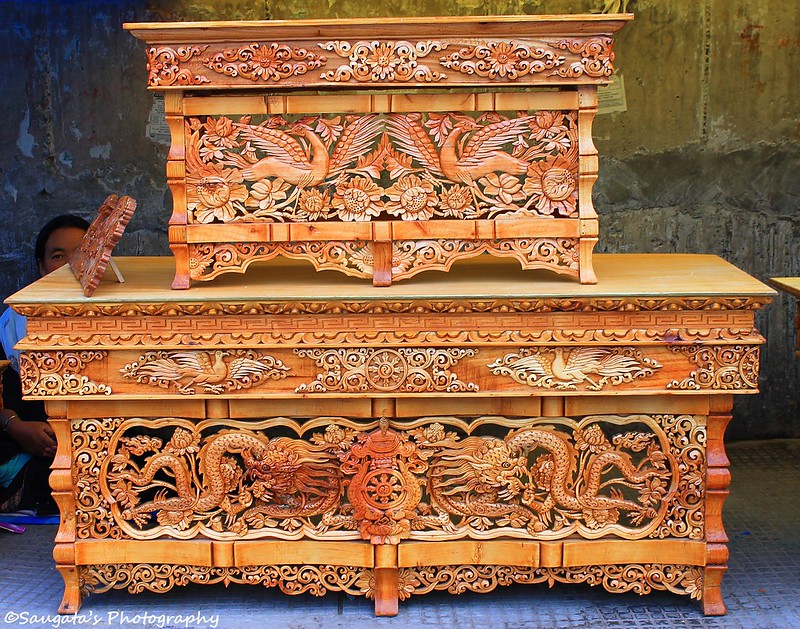
Carvings
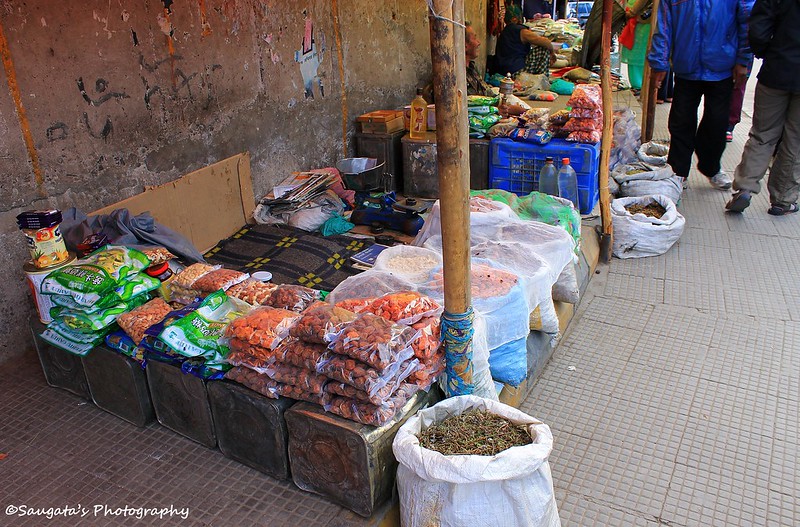
Spices
The Ladakh Special
To Be Continued......

Next: Leh Local Sightseeing