Tuesday, 16 August 2011

Ghorwadeshwar Caves

When you drive through the old Mumbai – Pune Highway (NH4), you can see a group of stairs on your left (when driving towards Mumbai) near the Somatane village.

I really wondered what the stairs are for and where they lead to. I surfed over internet and found out that these steps lead to some ancient Buddhist caves on the top of the hillock. Being curious, I was wondering when to go there but it did not take me long to visit these caves.

One Saturday afternoon while returning from the Wadeshwar waterfalls, we immediately planned to have a small halt there. It was almost 5.30 pm when we reached there and it was drizzling. But we were enthusiastic enough to reach to the top so we started climbing then and there. There is a parking fee of 10/- for four wheelers.

How to go:

I have visited these caves on my way back from Wadeshwar waterfalls. From Pune, these caves are no more than 40 Kms. You have to take the NH4 towards Mumbai. Once you cross the Dehuroad Police station, you have to go straight for around 14 kms when you can easily see the stairs on your left. Take this left and park your car. Here is the map.
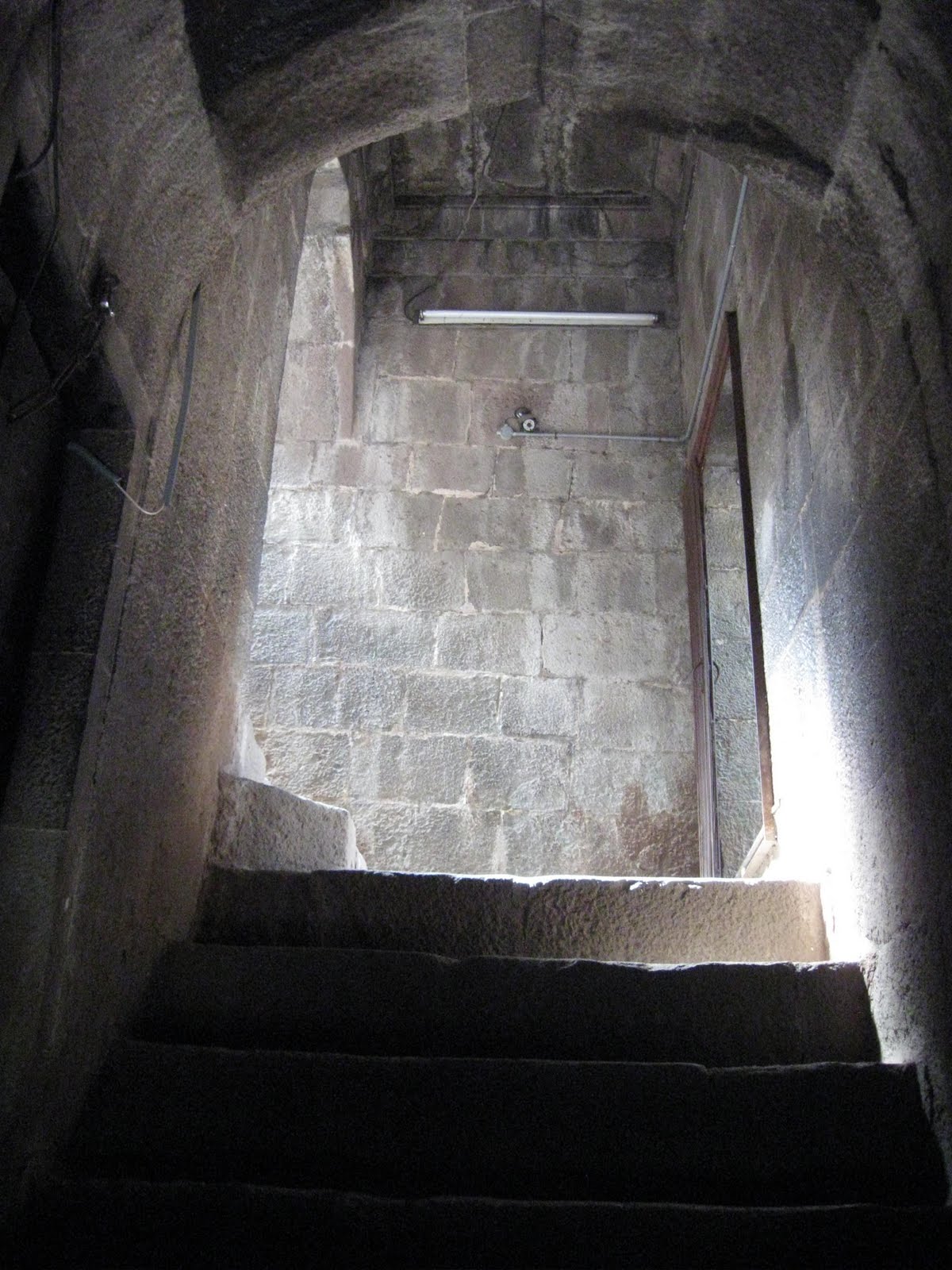
What should have been a small stop soon turned out to be an arduous trek. We soon found ourselves gasping for breadth, the stairs were really difficult to climb. We did not count the numbers but it seemed there were almost 250-300 stairs.


We took too many breaks in between and gave ourselves time to be amazed by the view from top. Everything looked tiny from the top giving a feeling that we are in the land of the dwarves.


After the stairs are ended we came across a small valley, but there was no sign of the caves. We were wondering where to go when we saw people coming towards us from the valley.  We learnt that we needed to cross the valley and again there was a trek upwards with no stairs. Our morals became weakened but we managed to encourage ourselves and drew out new breath and started the climb again.
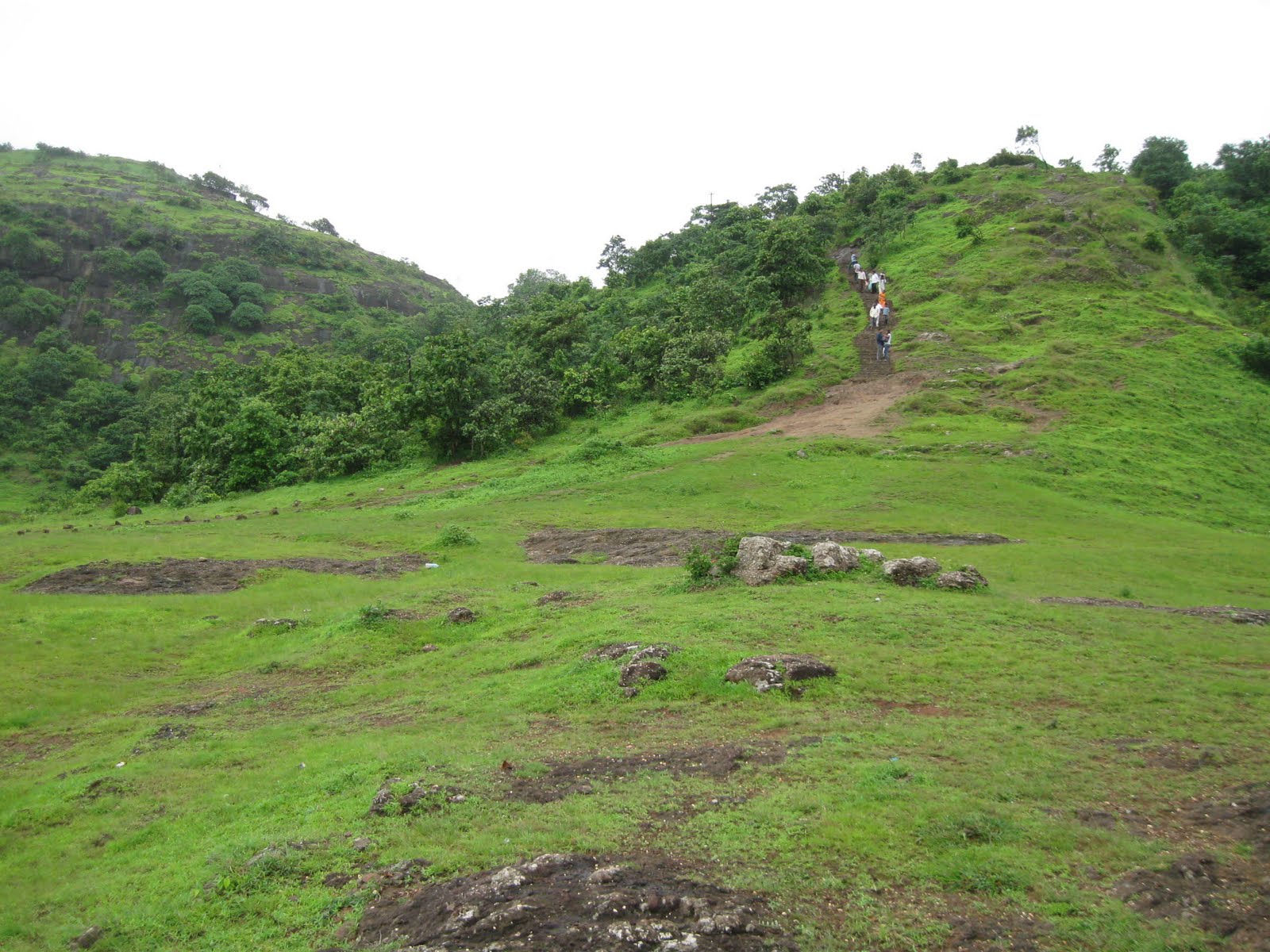


After around 20 mins or so we reached another valley from where we could see the rock cut caves.


There is a small fork – one road goes towards the right and another goes to the left. Through both these roads you can see some caves. We decided try out the right one first.
Across this road you can see 8-9 caves. The main one is now housing a shrine of ‘Lord Ghorwadeshwar’ and is converted to a temple. This used to be the ‘Chaitya’ (7.7 meters long, 6 meters wide and and 2.5 meters in height). All the other rooms are actually adjoining this Chaitya from both sides of it.


This is shot from one of these caves.


We came back to the fork and went towards the other lane. This lane only houses a single cave which is now inhabited by a person who seemed to be the priest of the temple.


In total there are around 10-11 caves which date back to the 3rd-4th Century AD, as per the Archeologists.


I also climbed through the rocks just to get an idea how it looks from the top. The place is very serene and magnificent from the top.


Coming down from the caves, we sat on a rock in the same valley (where the stairs ended while going up) to enjoy the cool breeze and view from the top.


One can see the Tung fort (this is what I guess) from here on.  Also the gigantic Ganpati statue of Shirgaon is visible from here (see the picture above - left side)..

This is a bigger picture of the Ganpati statue taken from a closer distance (when we were returning from the Wadeshwar waterfalls) – this will give you an idea how big this actually is (54 feet in height). This is on my list as another destination to be covered for a break for couple of hours.


Overall a good experience.

Wadeshwar Waterfalls

In monsoon the whole of Maharashtra goes beneath a carpet of green – the trees turn into shiny green, the earth moist, the air fresh and the weather mystic. The hills start to house numerous waterfalls. The silvery water running through the green background and falling on the ground with noise and full force – it is a sight to behold for the nature lovers. People like us who live within the concrete jungle for 5 days at a stretch always try to break free whenver there is a single opportunity to experience the nature at its purest form.

Wadeshwar waterfalls is certainly not as famous as the more renowned ones in Maharashtra – Lingamala Waterfalls (Mahabaleshwar), Kune Falls (Khandala), Lonavala Waterfalls (Lonavala), Randha Falls (Bhandardara) etc to name a few – yet it offers an unspoken beauty of its own. These are only monsoon waterfalls, in winter and summer the falls get completely dried up.

One Saturday afternoon we set off for a short drive to the Wadeshwar waterfalls situated near the Takve/Wadeshwar village – in between Kamshet and Vadgaon.

How to go:

To reach to these waterfalls you need to take the old Mumbai-Pune Highway (NH4) and go towards Kamshet. In between you will cross Dehuroad (watch out for heavy traffic here), Talegaon and then Vadgaon.

Once you cross Vadgaon you have to keep your eyes open for a small green board pointing towards right (after a few kms from the toll plaza), marked as Kanhe. This is Kanhe Phata. This is around 50 Kms from where we stay (Kharadi).

Once you reach the Kanhe crossing, you have to take a right – this is a narrow road and called as ‘Takve – Wadeshwar Road’. The google map does not show this road properly and also you can not locate the Wadeshwar waterfalls through google maps. Just after taking the right, you will need to cross a railway crossing – this is the Kanhe rail crossing, from this point you can see the Kanhe railway station to your left (and to your right on the return journey). Through this road you have to drive around 15 Kms more to reach towards the Wadeshwar waterfalls.

Here is the map of the road direction:
One caution here is that this road is really not in a good shape – there are too many potholes and the road itself is very narrow towards the end and it is very difficult to take a U-turn for a 4 wheeler. If you have a bike, this journey will suit you best. But we have seen buses and trucks going through this road. There are some jeeps after you cross the railway crossing, may be they can take you to the destination.

After a laborious 15 Km drive we finally reached towards the destination. We crossed a few villages through these extremely narrow roads. The villages seemed to be at a standstill with time.

The scenic beauties were well enough to forget us the painful drive, though I could not enjoy as I wished as I had to keep the eyes open to watch the road.


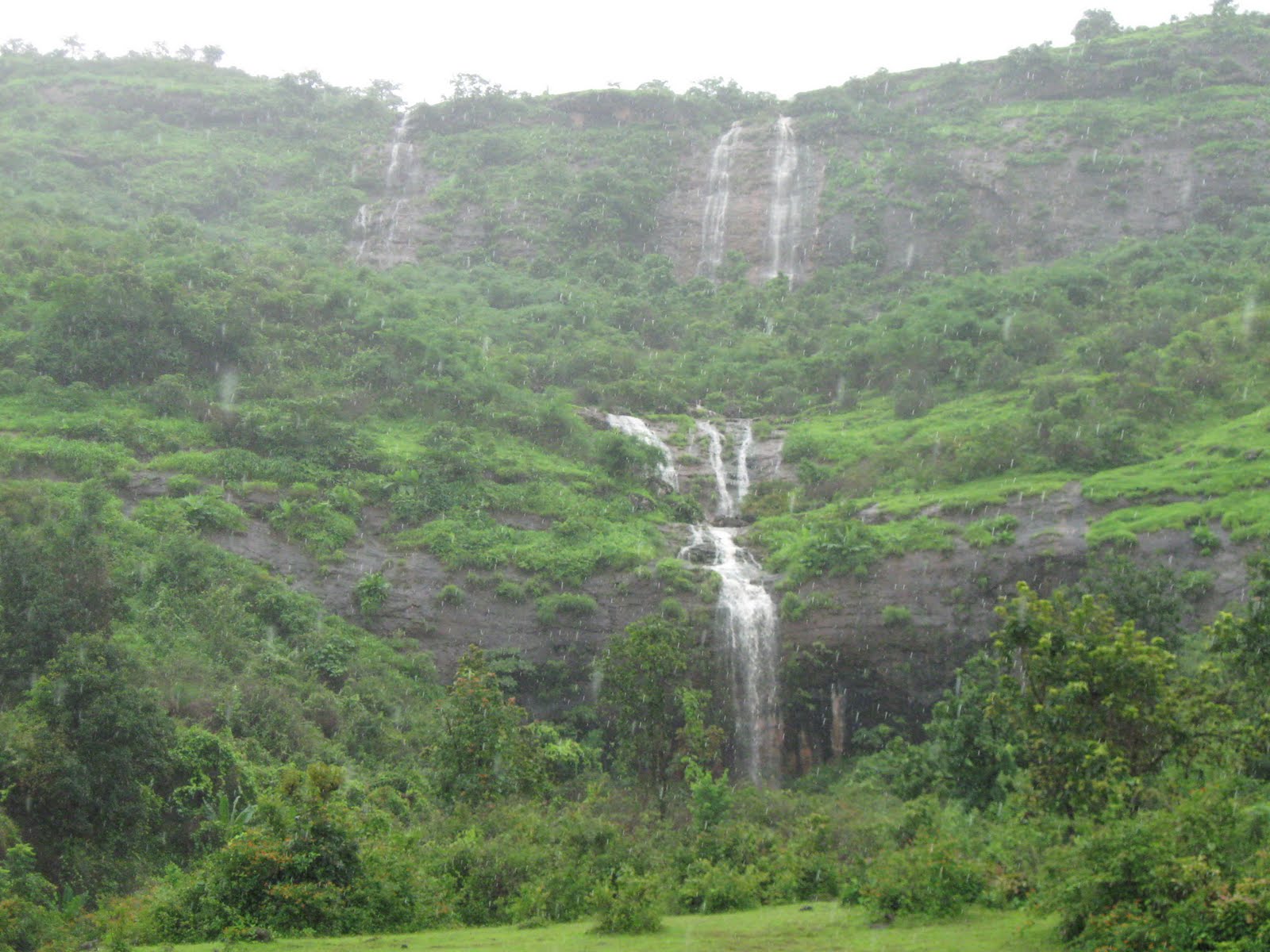
There are 3-4 waterfalls back to back, but there are a couple of big ones. One is a 3 tiered and another is a 2 tiered fall.


We went very close to the biggest one to get a quick glance. The water was falling down from a steep cliff with a roar. There were mists generated from the tiniest water particles. The atmosphere was calm – one can only hear the chattering of the birds and the noise of the falls.


We expected a bit commercialization as we have seen in other tourist places, but there is absolutely nothing around the waterfalls which gives the places a rather isolated ambience. As there was nothing else to do and it started raining already, we just spent a half of an hour there and turned ourselves towards the Ghorwadeshwar Caves on the way.

Some more snaps taken from the car:


The place is recommendable for a half day picnic in a big group.

Warnings:

1. There are absolutely no eateries around so please carry your own food and drinks (including water) in case need be.
2. There are no place to stay to it is not advisable to plan a overnight stay – in case you have to, please stay in Lonavala.
3. Road is pretty bad, so be careful while driving.
4. Roads are extremely narrow.

Wednesday, 10 August 2011

Shaniwarwada - A Once-Upon-A-Time Palace Fort Inside the City

First a little bit of history. Shaniwarwada was constructed by the Peshwa Baji Rao 1 who used to be a minister under the king Chhatrapati Sahu in the 1730s. The total expenditure was 16K INR which was a huge sum considering the time. Until in 1818, when the Peshwas surrendered to the British, it used to serve purpose of a leisurely and protective palace for the Peshwas. The word Shaniwarwada is a Marathi word which is originated from Shaniwar (Saturday) and Wada (Palace). It is believed that the constrcution started on a Saturday, hence the name.

In 1828, there was a great fire which lasted for seven days and it nearly destroyed the complete palace except the huge entrance and a few more remnants.

From many people I have heard about Shaniwarwada which they say, used to be a palace fort inside the Pune City itself. This and the pictures from various websites helped my curiosity grow so immensely that I decided not to take a rest until I see this 'Palace Fort' by myself.

How  to go: This place is very near to the Pune Railway Station. From the railway station you have to head towards the Shaniwar Peth. If you keep your eyes open for 'Shaniwarwada' while you drive, there are plenty of boards that would give you the direction towards the same. Here is the map of the road which we followed.

As I mentioned there is nothing much left of the palace, but we came to know that there used to be a seven storyed building. We can get an idea of the gigantism by the door which is yet intact.

Currently the place has become kinda park for everyone.

Straightway, here are the snaps:


Overall, a relaxing place for a couple of hours. If you need some more, you can avail the light and sound show which is conducted every evening here.